Water Still Standing
A pool remaining days after rain means the falls have gone. In this climate it may not properly dry out between downpours at all.

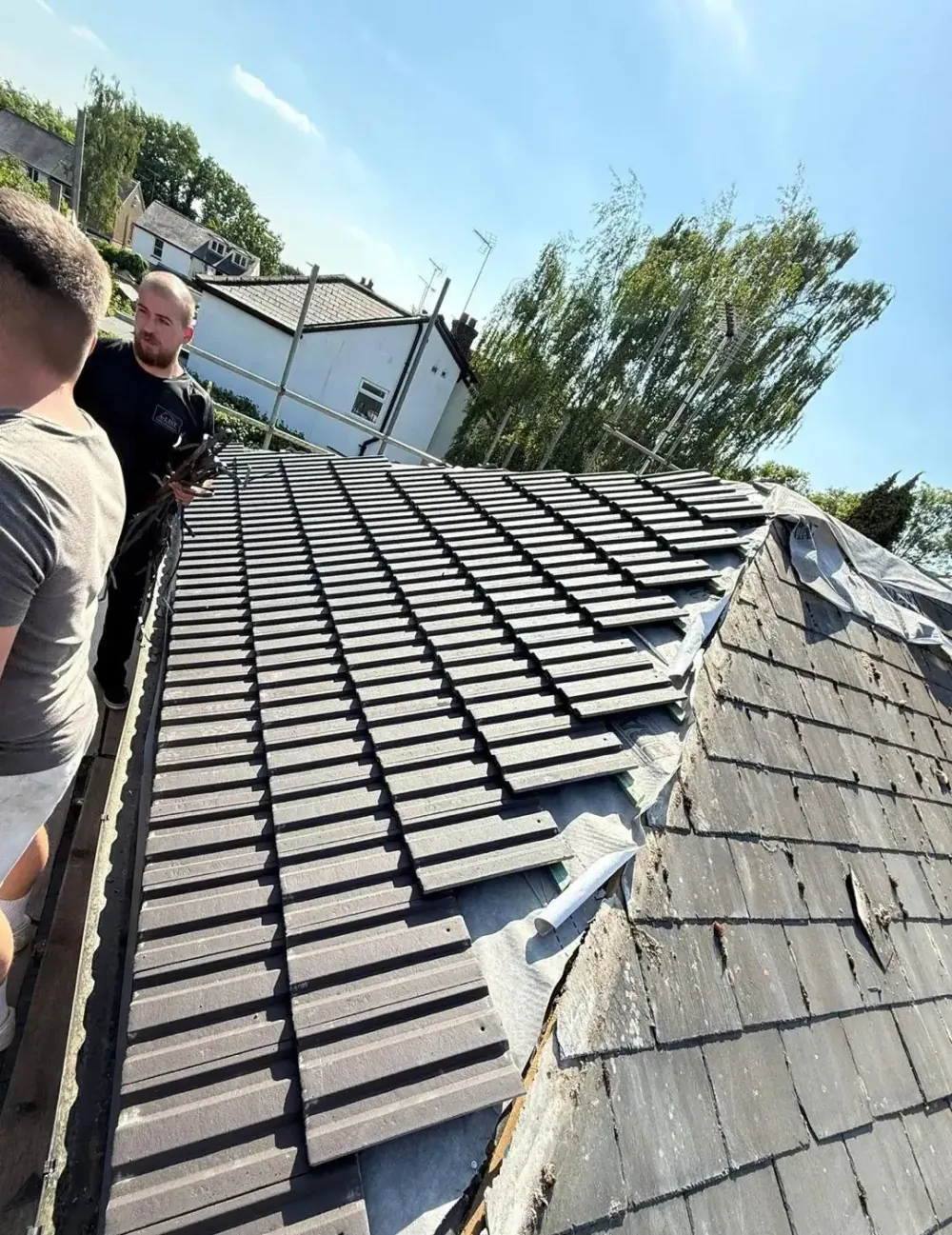
Frimley has more flat roofing per street than almost anywhere nearby, and a great deal of it is still wearing the covering it was built with.
Drive around Frimley Green or Mytchett and count the flat roofs. The estates built here through the sixties and seventies came with detached garages as standard, most of them block-built with a simple flat covering, and a fair number of the houses gained flat-roofed rear extensions in the decades afterwards.
Almost all of it was originally finished in pour-and-roll bitumen felt, which was the standard of its day and which has now comprehensively run out of years. Bitumen goes brittle with age and ultraviolet exposure. Once it is brittle, thermal movement cracks it — usually along a lap, usually at the point where two sheets overlap.
The second problem is falls, or the absence of them. A flat roof should not be flat; it needs a deliberate slope, typically around 1:80, so water is moving towards an outlet within seconds. A lot of these garage roofs were laid level from the outset, and where they were not, decades of sagging decking has flattened them anyway.
Sitting in the Blackwater Valley makes both worse. Standing water here gets very few genuinely dry days to evaporate, so it lingers, freezes, thaws and works away at every weakness in the covering until it finds one.
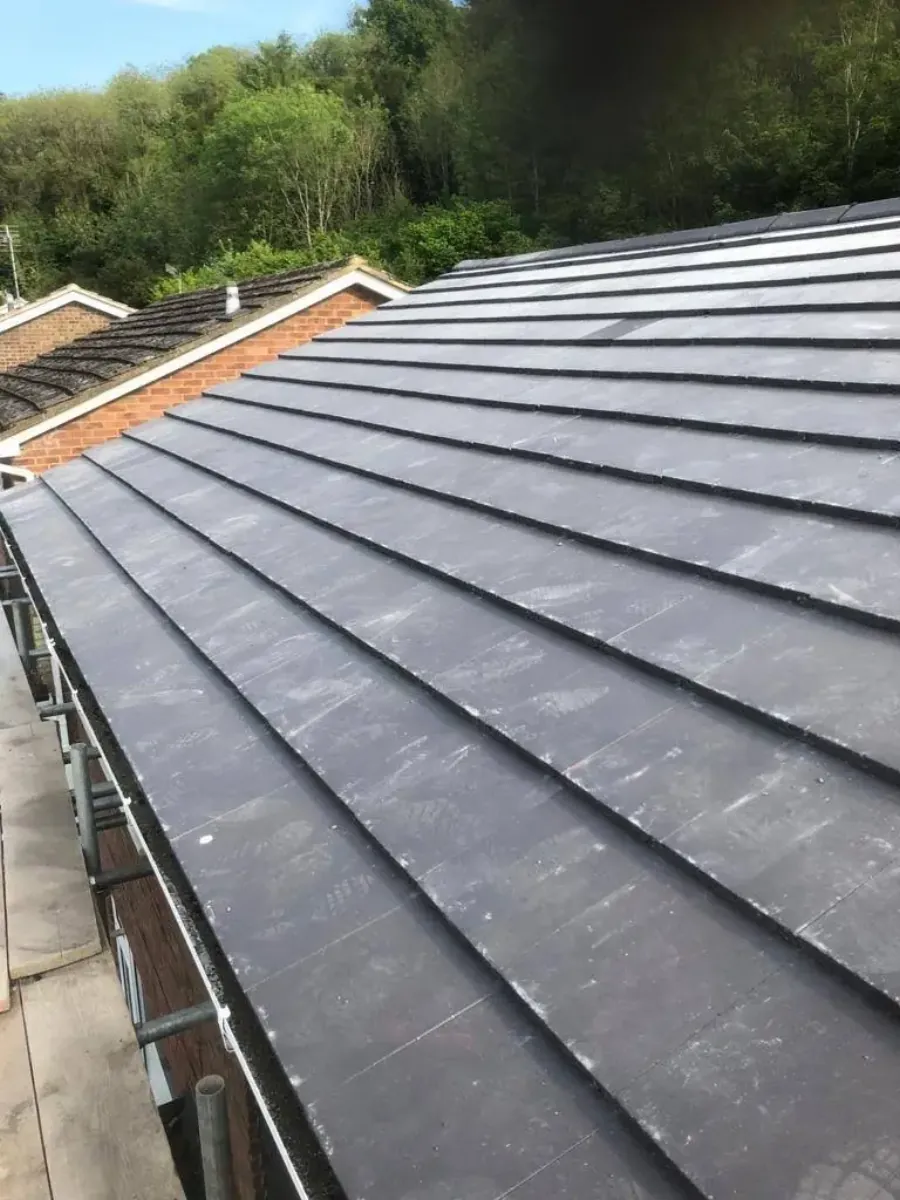
Flat roofs give plenty of notice before they fail outright. These are worth acting on.
A pool remaining days after rain means the falls have gone. In this climate it may not properly dry out between downpours at all.
Raised bubbles mean moisture trapped between layers, expanding on every warm day and stretching the covering further.
Old pour-and-roll felt cracks along its joints once brittle. When a lap opens, water gets into the build-up rather than running over it.
A drip edge coming away lets wind beneath the covering, and a gale can strip a garage roof in one go once it has a hold.
A roof that gives underfoot has waterlogged boards beneath. Nothing laid over soft decking will last, whatever it costs.
Moss growing on a flat roof holds water permanently against the covering — and in this damp air it establishes remarkably fast.
The order matters. Skipping any of it is how flat roofs end up done twice.
The old covering comes off so the deck can be seen. Anything soft, delaminated or rotten gets replaced rather than covered over.
Firrings or tapered insulation create a positive slope to the outlet. Most commonly skipped step, most common reason flat roofs fail early.
EPDM, GRP, single ply or torch-on felt, bonded or mechanically fixed as the system and the exposure require.
Upstands dressed, metal trims fitted, outlets and abutments terminated properly. This is where the hours go and the lifespan is earned.
Send us a photograph of the roof and where water collects and we can usually tell you whether it needs a repair or a re-cover before visiting.
From a porch canopy to a commercial unit, the same principles apply throughout.
Most of the flat roofs we replace in Frimley failed for reasons that had nothing at all to do with the covering chosen.
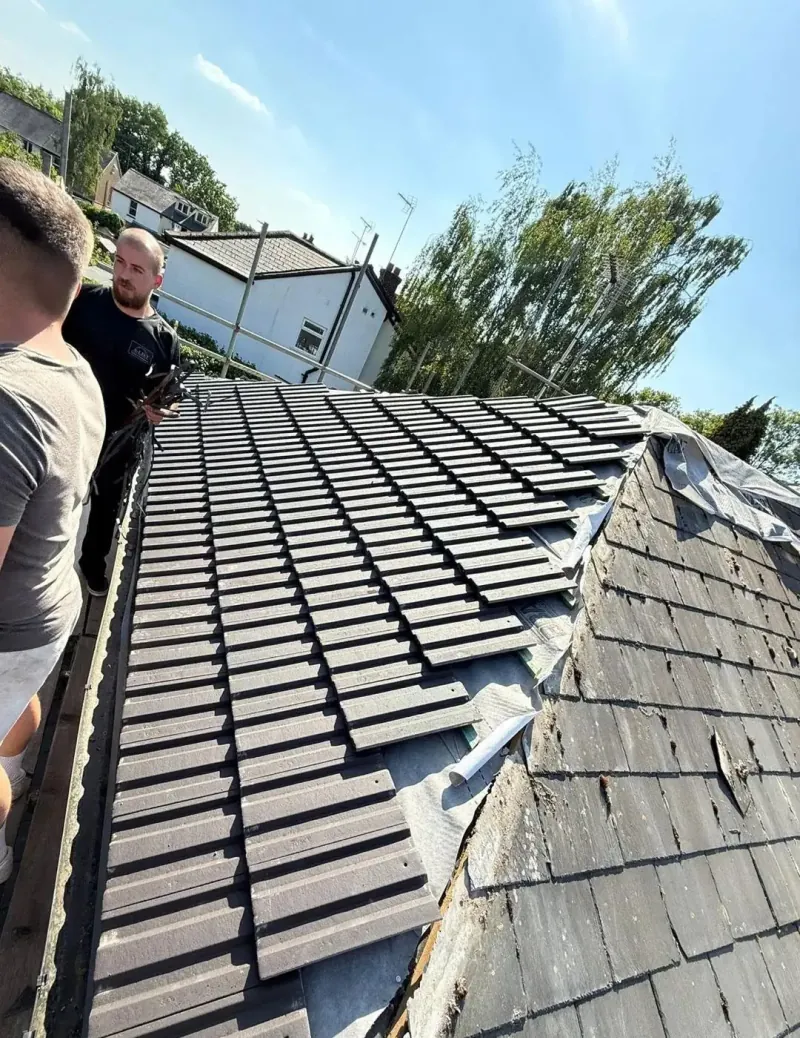
What people ask before committing to a flat roof re-cover.
Cannot see your question? We are always happy to talk it through — there is no such thing as a silly question when it comes to your roof.
A properly installed modern system on a sound, correctly falling deck gives decades rather than years, with manufacturer product guarantees behind it. The variable is almost never the covering — it is whether the deck, falls and detailing underneath were right.
On a standard rectangular garage of the sort found across Frimley, EPDM rubber is usually the best combination of cost, speed and reliability — one sheet, no joints. Where the roof is awkwardly shaped or will be walked on, GRP or single ply may suit better.
Sometimes, and where a patch is genuinely the right answer we will say so. But once a felt roof is blistering and splitting across its area, patching one spot simply relocates the leak. We show you photographs so you can decide with the facts rather than a sales pitch.
It depends on size, the state of the decking underneath and the system chosen — and the decking is the unknown until the old covering comes off. We inspect first, price in writing, and where we suspect the deck is soft we will say so up front rather than surprising you mid-job.
A warm roof puts insulation above the deck, keeping the structure at room temperature and largely removing condensation risk. A cold roof insulates between joists and relies on a ventilated void. Given how damp it is around here, warm build-ups are what we usually recommend.
Yes. Swapping tired polycarbonate for a solid, insulated and properly ventilated roof turns a room that was unusable for half the year into one you can actually use. It is among the more rewarding jobs we do.
Not quite what you were after? These are the closest services to this one.