Torn Felt In The Loft
Underlay hanging in strips between the rafters is the clearest signal available. Once it has gone, every tile is working on its own.

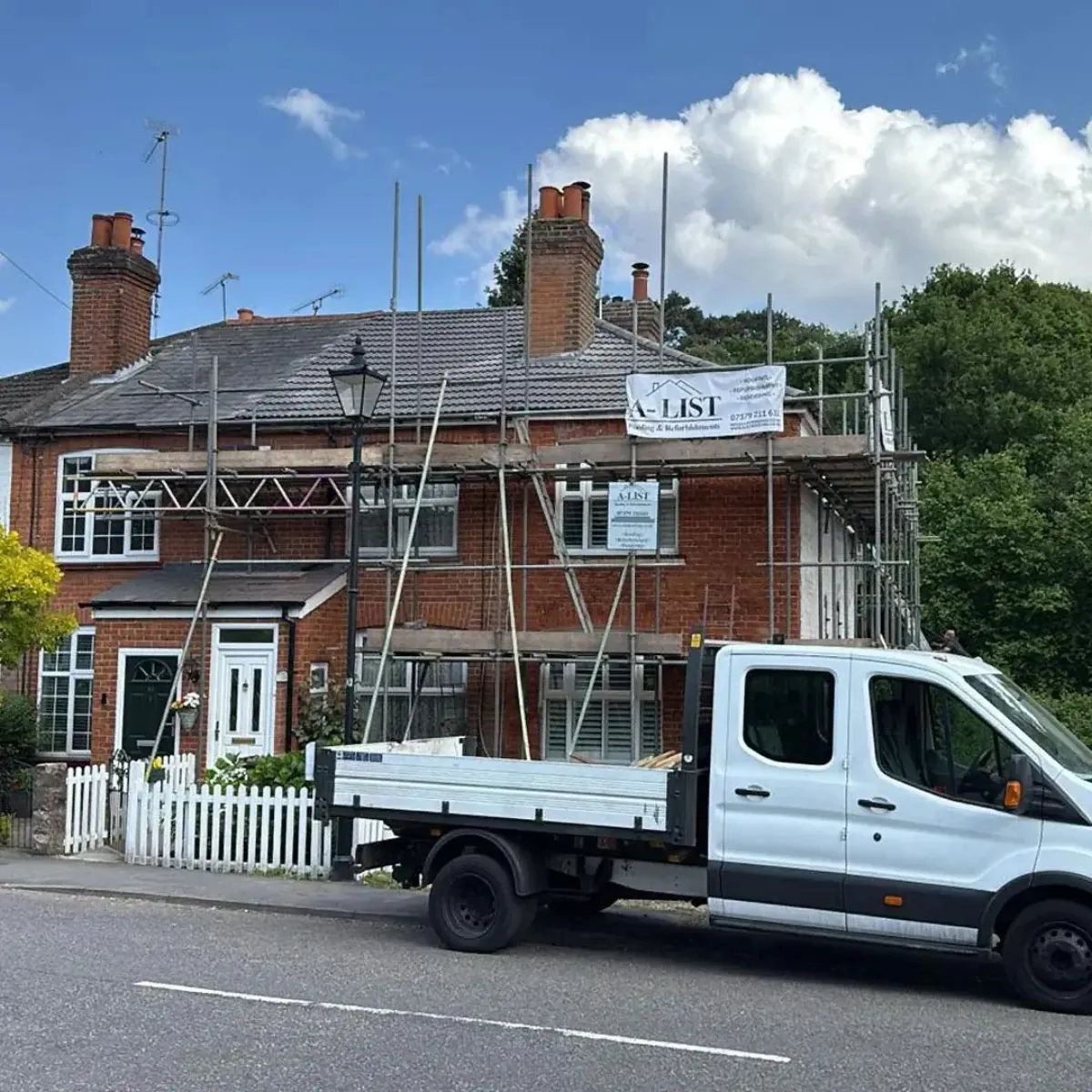
Whole Frimley streets are reaching this point together, because they were built together. When the felt has gone, a strip and re-cover is the only repair that lasts.
Homeowners here often mention it with a degree of suspicion: three houses on the road had their roofs done last year, and now theirs is leaking. It looks like a pattern because it is one — but the cause is construction history rather than anything more sinister.
Large parts of Frimley, Frimley Green and Mytchett were developed in concentrated bursts through the post-war decades and again through the sixties and seventies. An entire street would go up inside a couple of years, using the same interlocking concrete tiles laid over the same bitumen felt by the same contractor.
Concrete tiles are tough and will keep going for a long time. Bitumen felt will not. After fifty or sixty years it hardens, then cracks, then tears — typically at the eaves first, where it has been exposed to most weather. When every roof on the road started its life on the same day, they all reach that point within a few years of each other.
Down here in the Blackwater Valley there is an additional factor. The air stays damper than on the higher ground a few miles north, north-facing slopes rarely dry out fully, and roof timbers that get wet through a torn felt take much longer to recover. Left alone, a felt problem becomes a timber problem.
One of these alone may mean little. Three or four together usually settles the question.
Underlay hanging in strips between the rafters is the clearest signal available. Once it has gone, every tile is working on its own.
A leak repaired one winter reappearing elsewhere the next is rarely bad workmanship. It is usually a roof past the point repairs can help.
Light visible where the roof meets the wall plate means wind-driven rain has the same way in — and the eaves are where felt perishes first.
Concrete debris collecting after every frost means the tiles are now spalling rather than simply weathering.
Staining along rafters and battens shows water has been getting past the covering for some time — a particular risk in this damp valley air.
Three call-outs across two winters generally costs more than doing the job once. We will tell you honestly when you have reached that point.
Disruptive for a few days, then finished for decades. Knowing the sequence makes it far easier to live with.
Scaffold up first, drive and borders sheeted. On semis and terraces we agree access with your neighbour beforehand rather than on the morning.
Covering, battens and perished felt all come off. With the roof open the rafters and wall plate can finally be seen, and anything wet or rotten is reported before it gets covered.
Breathable membrane goes on, letting the roof space release moisture rather than trapping it — which matters more here than most places — then new treated battens.
Tiles laid, then the details that decide the lifespan: dry ridge and verge instead of mortar, new lead to abutments, and re-formed valleys.
It is a lot of money and worth a second opinion. Our inspection is free and we will say honestly if repairs would still see you right.
Everything listed sits inside the quoted figure. The final invoice matches the quote you accepted.
What separates a thirty-year roof from a fifteen-year one is almost entirely detail you will never see from the pavement.
The questions we are asked most before a re-roof in Frimley.
Cannot see your question? We are always happy to talk it through — there is no such thing as a silly question when it comes to your roof.
A typical Frimley semi or detached house is usually days rather than weeks once the scaffold is up. Complexity matters more than size — dormers, valleys and steep pitches all add time. You get a realistic programme with the quote and an update if the weather moves it.
Yes, and we do it regularly. The join is detailed properly at the party wall so there is no weakness where old meets new. Worth knowing though: the two halves will not match visually until your neighbour follows suit, so it is always worth a conversation with them first.
No. The roof is open during the day and made watertight each evening, and the house stays perfectly liveable. It is noisy and there will be dust in the loft, so most people move stored belongings down or sheet them over beforehand.
We stop, photograph it and speak to you before anything gets covered. Minor repairs are normally absorbed within the quoted price; anything structural is priced separately so you can see exactly what the extra relates to. Nothing is hidden under new felt.
Yes, and we work right through it. We strip in sections rather than opening the whole roof at once, and everything is watertight before we leave each day. Sustained rain may add a day here and there, but it is no reason to wait until spring with a failed roof.
It is worth considering, since access will never be cheaper. Given how damp the air is around the Blackwater Valley, ventilation deserves as much attention as insulation — getting one right and the other wrong causes condensation problems. We will talk both through with you.
Not quite what you were after? These are the closest services to this one.